


Wisdom Teeth Melbourne
Wisdom Teeth Removal Melbourne: X-ray first, a written plan, and oral or IV sedation to discuss
Avenue Dental Brunswick offers wisdom teeth removal in Melbourne’s inner north, on Sydney Road between Albert and Phoenix Streets. An X-ray comes first, so your dentist can see how your wisdom teeth are positioned and tell you plainly whether removal is worth considering. If it is, they’ll walk you through the sedation options that may suit you, including oral sedation and IV sedation (often called twilight sedation).
Wisdom tooth playing up? Ring (03) 7053 4099 before 10am and we’ll see you that day. The $95 emergency visit covers your consultation and X-rays.
Wisdom teeth removal in Melbourne
Wisdom teeth, or third molars, sit right at the back of the mouth and tend to show up in your late teens or early twenties. Some erupt neatly with no fuss. Others run short of space and end up stuck under the gum, wedged against the molar in front or growing at an angle, which can lead to infection, pain or decay. Removing one is a surgical procedure that’s usually done in the chair with local anaesthetic, and oral or IV sedation may be an option after your assessment.
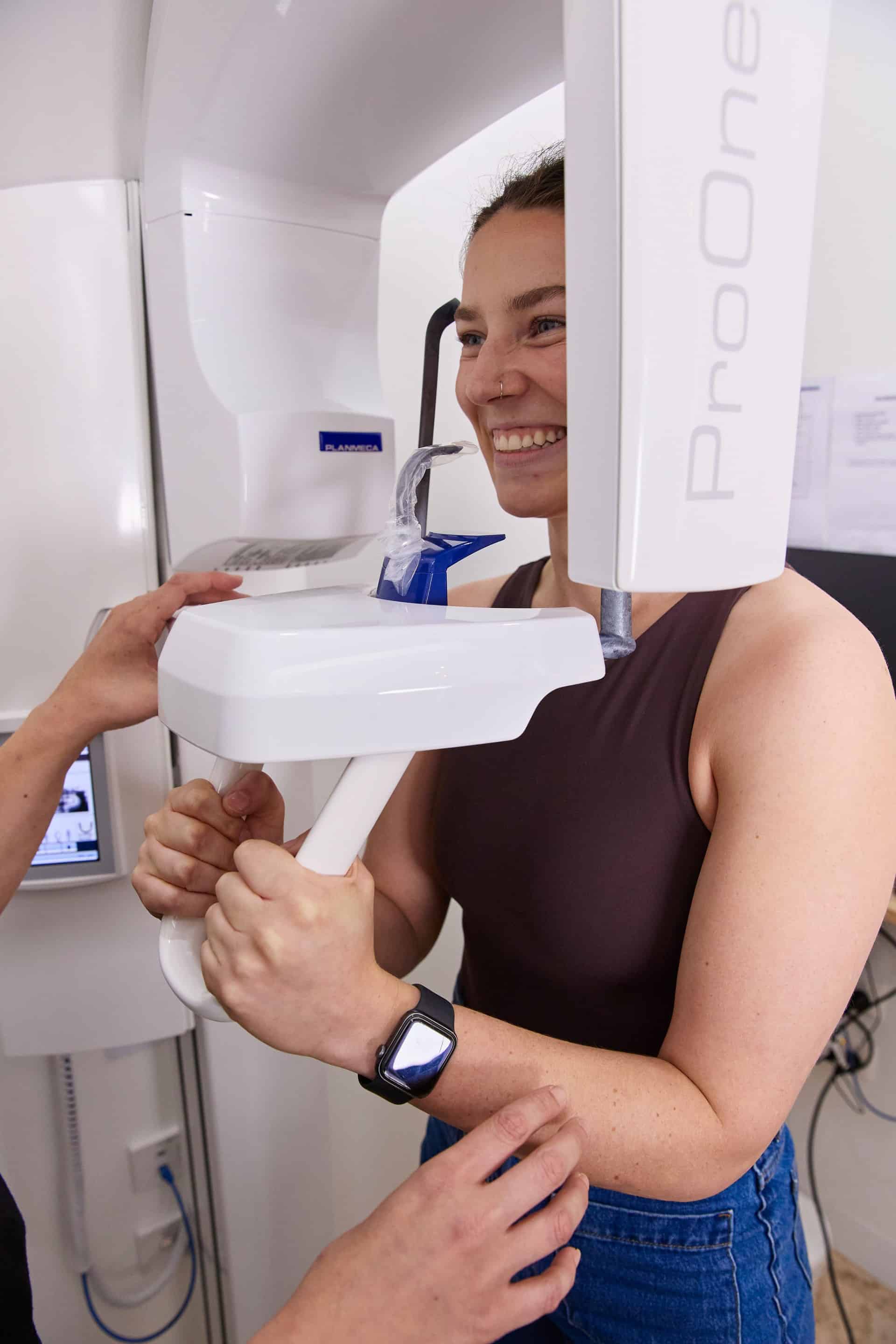
At Avenue Dental in Melbourne, we begin with an examination and an OPG X-ray of your whole jaw, adding a 3D scan if the roots appear close to the nerve. You’ll see the images, hear your options and leave with a written plan and quote, with no obligation to book. The first few days are typically when swelling is most obvious, but recovery is individual.
The information on this page is general in nature and does not constitute clinical advice. Individual suitability, treatment and costs depend on an assessment specific to you. Before proceeding, seek a second opinion from an appropriately qualified health practitioner. View treatment risks here.

Is it your wisdom teeth? What our Melbourne dentists see most
Wisdom teeth rarely announce themselves by name. Melbourne patients usually come to us with a symptom at the back of the mouth and want to know what’s behind it. Tap the one that matches yours.
Swipe for more →
You said
“It aches way back in my jaw”
A wisdom tooth that’s pushing to come through, or leaning on the molar next to it, commonly causes a deep ache behind your last tooth. The discomfort can spread up towards the ear or down the side of the neck.
Other things can mimic it, including clenching, a cracked tooth or blocked sinuses, so we confirm the cause with an X-ray first. If it is the wisdom tooth, your dentist will point it out on the image and talk through the options, which may include simply keeping an eye on it.
Book at Avenue Dental Brunswick
This information is general in nature and isn’t a substitute for an examination. If swelling spreads to your face, neck or eye, or you have trouble swallowing or breathing, go to your nearest hospital emergency department.
You said
“The gum at the very back is red and swollen”
When a wisdom tooth has only partly broken through, the gum flap over it can trap food and bacteria and become infected. This is known as pericoronitis, and it has a habit of calming down and then returning.
We can clean the area and help settle the infection at your visit. When it keeps recurring, removing the tooth is often what breaks the pattern. Call Brunswick before 10am and we’ll see you the same day.
Book at Avenue Dental Brunswick
This information is general in nature and isn’t a substitute for an examination. If swelling spreads to your face, neck or eye, or you have trouble swallowing or breathing, go to your nearest hospital emergency department.
You said
“Food keeps lodging behind my back molar”
An angled or half-erupted wisdom tooth leaves awkward spaces where food and plaque collect and a toothbrush struggles to reach. Over time, decay can develop in the wisdom tooth or in the molar in front of it.
Sometimes improved cleaning is enough to manage it. If decay has already started on the neighbouring molar, taking out the wisdom tooth is often the best way to protect that tooth.
Book at Avenue Dental Brunswick
This information is general in nature and isn’t a substitute for an examination. If swelling spreads to your face, neck or eye, or you have trouble swallowing or breathing, go to your nearest hospital emergency department.
You said
“My jaw is tight and won’t open wide”
Infection around a wisdom tooth can irritate the nearby chewing muscles, causing them to stiffen. Opening your mouth, eating or yawning may become uncomfortable.
This needs prompt attention so the infection can be treated before any decision about the tooth. If swelling spreads into your face, neck or near your eye, or you find it hard to swallow or breathe, go to your nearest hospital emergency department straight away.
Book at Avenue Dental Brunswick
This information is general in nature and isn’t a substitute for an examination. If swelling spreads to your face, neck or eye, or you have trouble swallowing or breathing, go to your nearest hospital emergency department.
You said
“My dentist mentioned an impacted tooth”
Impacted simply means the tooth can’t erupt fully. It may be tipped into the molar in front, lying horizontally, or still sitting below the gum or within the bone.
An impacted tooth won’t always need removing. Your dentist considers its angle, any symptoms, any effect on nearby teeth and its distance from the nerve, then explains the case for removal versus monitoring.
Book at Avenue Dental Brunswick
This information is general in nature and isn’t a substitute for an examination. If swelling spreads to your face, neck or eye, or you have trouble swallowing or breathing, go to your nearest hospital emergency department.
You said
“No pain, but I’ve been told to monitor them”
Many wisdom teeth never cause a problem. If yours have erupted straight and you can clean around them, an occasional X-ray to check on them may be all that’s needed.
Some people opt to have them removed earlier, before the roots are fully formed, as healing tends to be quicker when you’re younger. Your dentist will explain the pros and cons so you can choose what’s right for you.
Book at Avenue Dental Brunswick
This information is general in nature and isn’t a substitute for an examination. If swelling spreads to your face, neck or eye, or you have trouble swallowing or breathing, go to your nearest hospital emergency department.
Our view
Should all wisdom teeth come out?
Not necessarily. Removal is recommended when there’s a clear clinical reason. Wisdom teeth that have come through straight, can be cleaned properly and aren’t affecting the teeth around them can often stay, with periodic X-rays to monitor them.
Often fine to keep
Fully through and upright, easy to clean, causing no symptoms and not affecting the tooth in front.
Commonly removed
Recurring gum infections, decay that can’t be restored, damage to the second molar, or a cyst developing around the tooth.
A conversation to have
Impacted teeth with no symptoms yet. The tooth’s angle, your age and its closeness to the nerve all matter, and the decision is yours.
What we base it on
An examination and an OPG X-ray, plus a 3D scan where the roots sit near the nerve.
The four main types of impacted wisdom teeth
The angle a wisdom tooth sits at influences how it’s removed, how long the procedure takes and what recovery may involve. Your X-ray will show which of these applies to you.
Simplified illustrations. The solid tooth on the left is the second molar, and the dashed tooth is the wisdom tooth.
gum line
Mesioangular
Tipped forward into the second molar. It’s the most frequently seen type and can trap food against the tooth next to it.
gum line
Vertical
Standing upright but without enough room to erupt fully. It may emerge over time or remain partly covered by gum.
gum line
Horizontal
Lying on its side and pushing against the roots of the second molar. Removal is usually done in sections.
gum line
Partially erupted
Partly through the gum, with a flap covering the rest. It’s more prone to repeat gum infections (pericoronitis).

From awake to deeply relaxed
Sedation for wisdom teeth removal in Melbourne
Every procedure includes local anaesthetic. Based on your medical history and your dentist’s assessment, you may also be offered oral sedation or IV sedation. Your dentist will go through what may suit you during your consultation.
Minimal to moderate sedation
Oral sedation
A sedative medication your dentist prescribes for you to take before the appointment. It’s used alongside local anaesthetic to help you feel less anxious, and you’ll receive instructions on exactly when to take it.
What you may notice
Everyone responds a little differently. You may feel relaxed and sleepy while staying awake and able to respond.
Getting home
Arrange for a responsible adult to take you to and from the appointment. Don’t drive, use machinery or make important decisions until your dentist says it’s safe, often 24 hours later.
Risks
Oral sedation carries risks, which your dentist will go through with you at your consultation. Read more about treatment risks.
Moderate sedation
IV sedation
Sometimes called twilight sedation. Medication is given through a small cannula in your hand or arm, alongside local anaesthetic, with a visiting anaesthetist. Your breathing, heart rate and oxygen levels are monitored throughout, and the aim is to help you feel deeply relaxed during the procedure.
What you may notice
Experiences vary. Some people recall very little of the procedure. You’re not unconscious and can usually respond.
Getting home
A responsible adult needs to take you home and stay with you. Avoid driving or making important decisions for at least 24 hours, or as your dentist advises.
Risks
IV sedation carries risks, which your dentist will go through with you at your consultation. Read more about treatment risks.
Sedation is not suitable for everyone. General anaesthetic isn’t currently offered at our Melbourne practice; if it may be suitable for you, your dentist can discuss your options. Effects, recovery and how much you remember vary between individuals. Your dentist will assess your suitability and explain the risks relevant to you before you consent. Any surgical or invasive procedure carries risks. Before proceeding, you should seek a second opinion from an appropriately qualified health practitioner.
Wisdom teeth removal recovery: what the first 14 days look like
No two recoveries are identical, and your dentist will give you aftercare steps tailored to you. This is a general picture of the first fortnight.
Recovery timeline
Protect the clot
Keep gentle pressure on the gauze as instructed, apply a cold compress on and off, and sleep with your head raised. Avoid rinsing, spitting, straws, smoking and hot drinks while the clot forms.
Peak swelling days
Facial swelling and jaw stiffness commonly reach their highest point around now. Warm salt-water rinses usually begin at this stage, as your dentist directs.
Getting back to normal
Swelling begins to subside and many people are back at work, uni or study. Pain that’s increasing rather than easing may be dry socket, so give us a call and we’ll see you.
Final healing
Most swelling has resolved. Dissolvable stitches drop out on their own, and the gum continues to close over the socket for several more weeks. A review visit checks your healing.
Tap a day to see what to expect.
Illustrative only. Swelling, comfort and healing vary from person to person.
A Melbourne note
Give the gym, laps at Brunswick Baths and runs around Princes Park or along the Merri Creek trail a few days off while the sockets settle. Hard exercise can disturb the clot, and your dentist will let you know when you’re clear to return.
Why choose Avenue Dental for wisdom teeth removal in Melbourne
Diagnosis before treatment
Every patient gets an OPG X-ray, plus a 3D scan when roots are close to the nerve, so recommendations are based on what the images show.
Sedation options
Oral sedation, and IV sedation with a visiting anaesthetist, are available at Brunswick depending on your assessment. Your dentist will discuss what may suit you.
Seen today if you’re in pain
Ring before 10am and we’ll see you the same day. The $95 emergency visit covers your consultation and X-rays.
On Sydney Road, Brunswick
Easy to reach from Coburg, Fitzroy North, Carlton North, Parkville and the uni precinct. Your assessment, removal and review are all done at the one practice.
Locally owned and operated
Brunswick is led by a managing partner who’s in the practice every day, alongside a local team. Avenue Dental has been looking after patients since 1990.
Transparent quotes, flexible payment
A written quote with item numbers before you book, with Humm interest-free payment plans available, subject to approval and terms assessed by Humm.
Wisdom teeth removal in Melbourne: your questions answered
How much does wisdom teeth removal cost in Melbourne?
Where can I get my wisdom teeth removed in Melbourne?
Is IV sedation the same as twilight sedation?
What sedation options are there for wisdom teeth removal in Melbourne?
Can I have my wisdom teeth out under general anaesthetic?
What’s the best age to have wisdom teeth removed?
What are the opening hours at Avenue Dental Brunswick?
How long does recovery from wisdom teeth removal take?
Can I have all four wisdom teeth removed in one visit?
What are the risks of wisdom teeth removal?
Does private health insurance cover wisdom teeth removal?
What is dry socket?
Can I be seen today for wisdom tooth pain in Melbourne?
Do I need a referral for wisdom teeth removal in Melbourne?

Flexible payment plans
At Avenue Dental on the Sunshine Coast, Brisbane, Adelaide and Melbourne, we understand that dental treatment can be difficult to fit into your budget, which is why we offer a range of different dental payment plan options.


